昇思25天学习打卡营第4天|数据变换
·
 Let's view some examples.
Normalize, output = (input - mean )/ std:
normalize = vision.Normalize(mean=(0.14,), std= (0.44))
normalized_image = normalize(rescaled_image)
print(normalized_image)
the data changed from: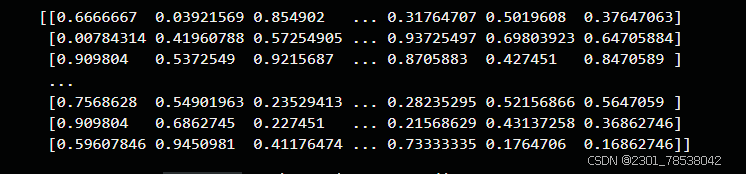 to :
to :
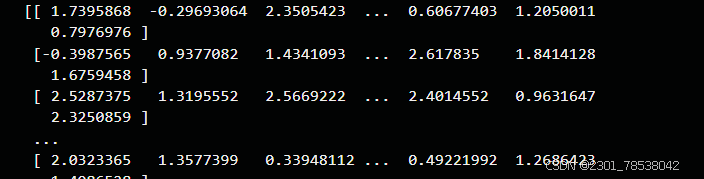 anyway, it is useful ,maybe related to kaiming normalized.
Tokenize:
def my_tokenizer(content):
    return content.split()
test_dataset = test_dataset.map(text.PythonTokenizer(my_tokenizer))
print(next(test_dataset.create_tuple_iterator()))
for example, if I have texts ['Welcome to Beijing']
I would split into three words(tokens), get ['Welcome' ,'to','Beijing'], which is saved as a tensor, a common type in transformer.
more concretely, we can def a vocab, for example:
vocab = text.Vocab.from_dataset(test_dataset)
print(vocab.vocab())
and we get:

and we can transform the tokens to index:
test_dataset = test_dataset.map(text.lookup(vocab))
print(next(test_dataset.create_tuple_iterator()))


昇腾计算产业是基于昇腾系列(HUAWEI Ascend)处理器和基础软件构建的全栈 AI计算基础设施、行业应用及服务,https://devpress.csdn.net/organization/setting/general/146749包括昇腾系列处理器、系列硬件、CANN、AI计算框架、应用使能、开发工具链、管理运维工具、行业应用及服务等全产业链
更多推荐

 10
10 0
0- 0


 已为社区贡献26条内容

所有评论(0)