昇思25天学习打卡营第21天|RNN实现情感分类
MindSpore-RNN情感分类
文章目录
昇思MindSpore应用实践
本系列文章主要用于记录昇思25天学习打卡营的学习心得。
1、RNN模型简介
RNN(循环神经网络)
循环神经网络(Recurrent Neural Network, RNN)是一类以序列(sequence)数据为输入,在序列的演进方向进行递归(recursion)且所有节点(循环单元)按链式连接的神经网络。下图为RNN的一般结构:
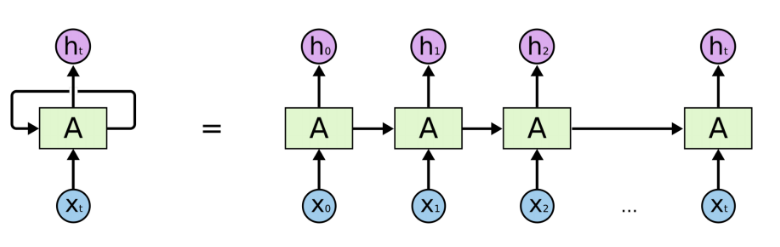
图示左侧为一个RNN Cell循环,右侧为RNN的链式连接平铺。实际上不管是单个RNN Cell还是一个RNN网络,都只有一个Cell的参数,在不断进行循环计算中更新。
由于RNN的循环特性,和自然语言文本的序列特性(句子是由单词组成的序列)十分匹配,因此被大量应用于自然语言处理研究中。下图为RNN的结构拆解:
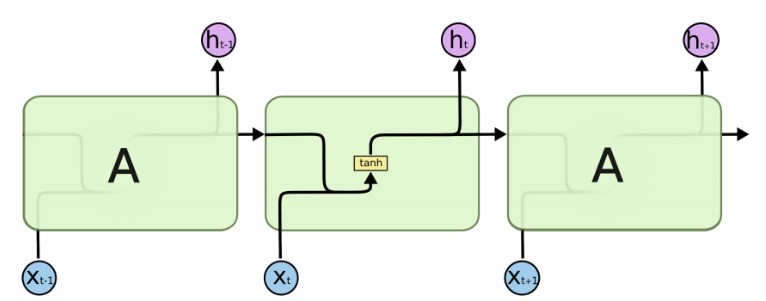
RNN单个Cell的结构简单,因此也造成了梯度消失(Gradient Vanishing)问题,具体表现为普通的RNN网络在序列较长时,在序列尾部已经基本丢失了序列首部的信息。为了克服这一问题,LSTM(Long short-term memory)被提出,通过门控机制(Gating Mechanism)来控制信息流在每个循环步中的留存和丢弃。下图为LSTM的结构拆解:
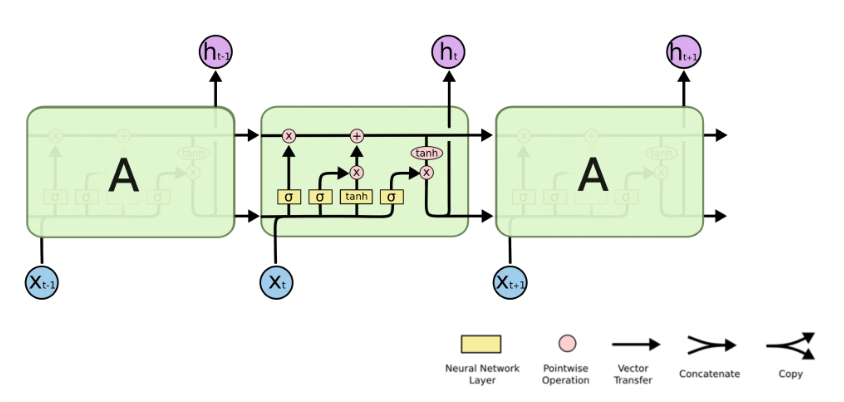
本节选择LSTM(一种RNN的改进变体)而不是经典的RNN做特征提取,来规避梯度消失问题,并获得更好的模型效果。
长-短期记忆网络 (LSTM)
为了解决 RNN 处理长期依赖关系时存在梯度消失/爆炸问题(随着前后信息之间的距离不断拉大,RNN会逐渐难以学习其中的连接信息),陆续出现了一些改进的 RNN 变体,如长短期记忆网络(LSTM)和门控循环单元(Gated Recurrent Unit,GRU)。这些模型通过引入门控机制,允许网络有选择性地更新记忆和遗忘信息,从而更有效地处理时间序列的长期依赖关系,避免梯度消失。
LSTM的全称是Long Short-Term Memory,顾名思义,它具有记忆更长的短期信息能力的神经网络。
就像我们学习知识时会不断加深特别重要的记忆和遗忘部分不那么感兴趣的记忆,LSTM引入了门控机制用于控制特征的流通和损失。
标准RNN中只包含单个tanh层的重复模块: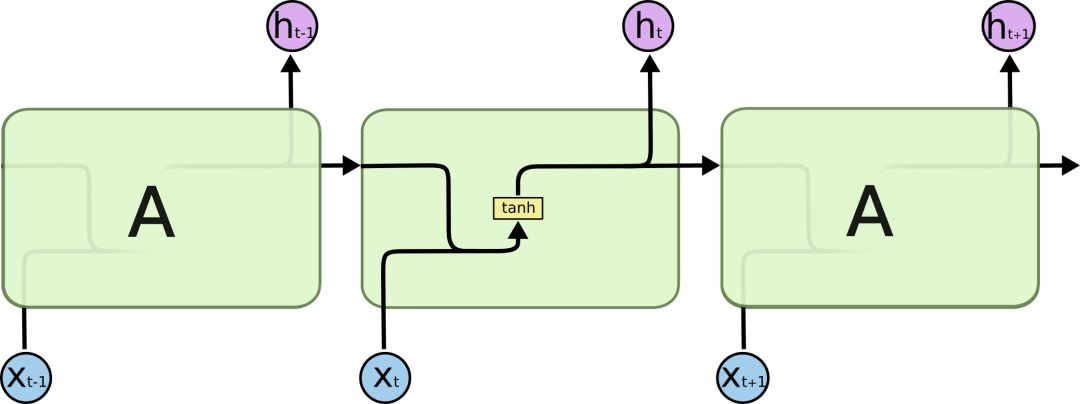
而LSTM中包含了与之相似的链式结构,但不同的是它的重复模块结构不同,是加入了门控机制的神经网络: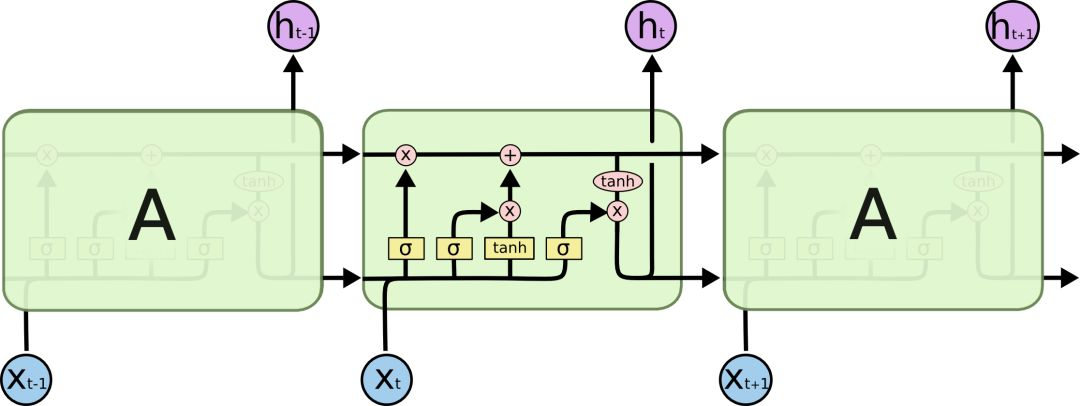
LSTM结构中的符号定义:

LSTM单元包含的内容:
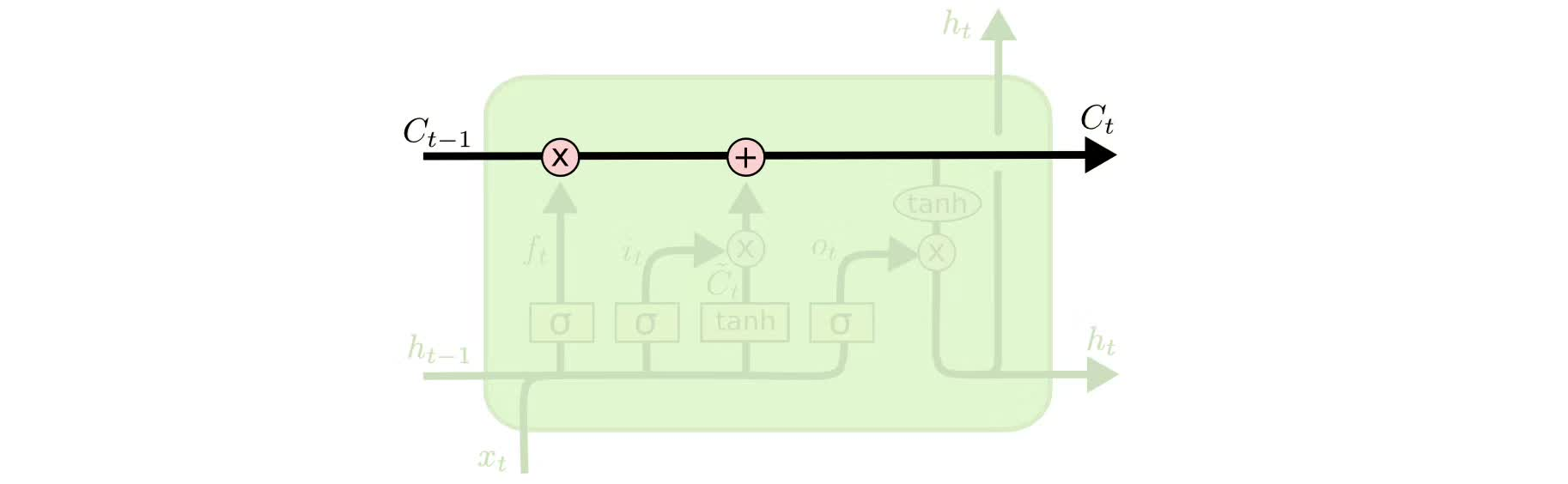
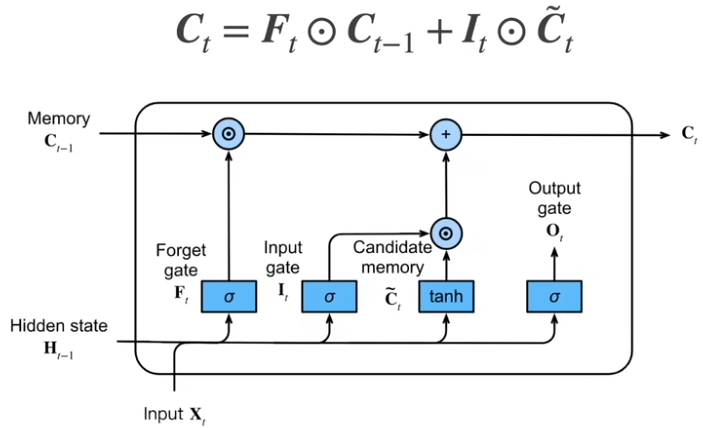
Cell 状态/记忆单元(Cell State):
cell状态本身是一个向量,包含了关于序列中过去的信息,以及在当前时刻步骤的输入中保留的新信息。它是LSTM单元的主要内部状态,用于存储长期依赖关系。
cell状态有点像传送带,它将遗忘门与cell状态的计算结果和输入门与候选记忆的计算结果贯穿整个链式结构,这其实也就是信息记忆的地方,因此信息能很容易地以不变的形式从中流过。
F t × C t − 1 F_t×C_{t−1} Ft×Ct−1表示希望删除的信息, I t × C ~ t I_t× \widetilde{C}_t It×C t表示新增的信息
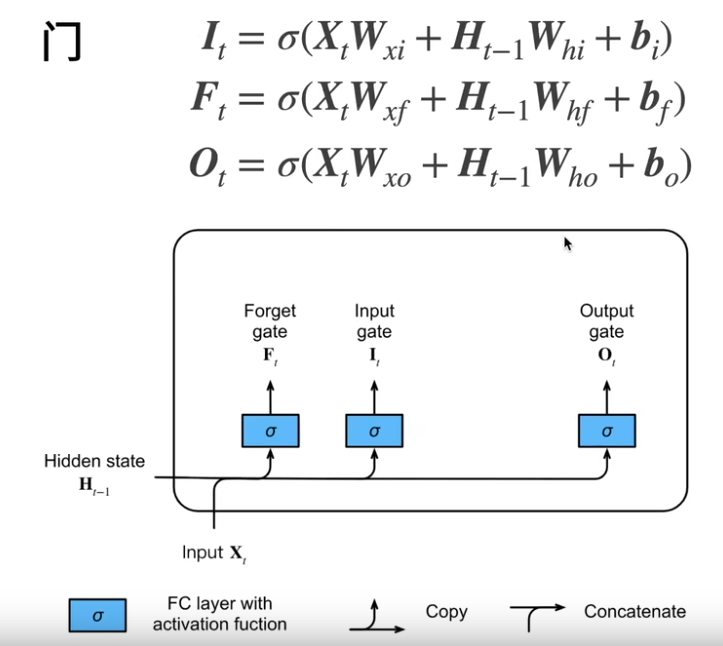
输入门(Input Gate):
控制有多少信息可以流入cell状态。它使用输入数据和先前的隐藏状态来决定更新哪些信息。
遗忘门(Forget Gate): 决定在cell状态中丢弃多少旧的信息。通过考虑先前的隐藏状态和输入,它确定要保留多少过去的信息。
输出门(Output Gate):
控制从cell状态到输出的信息流。通过考虑先前的隐藏状态和输入,它决定将多少cell状态的信息传递到当前的隐藏状态和输出。
候选记忆单元:
tanh将信息值映射到[-1,1]之间,有助于缓解梯度爆炸问题。
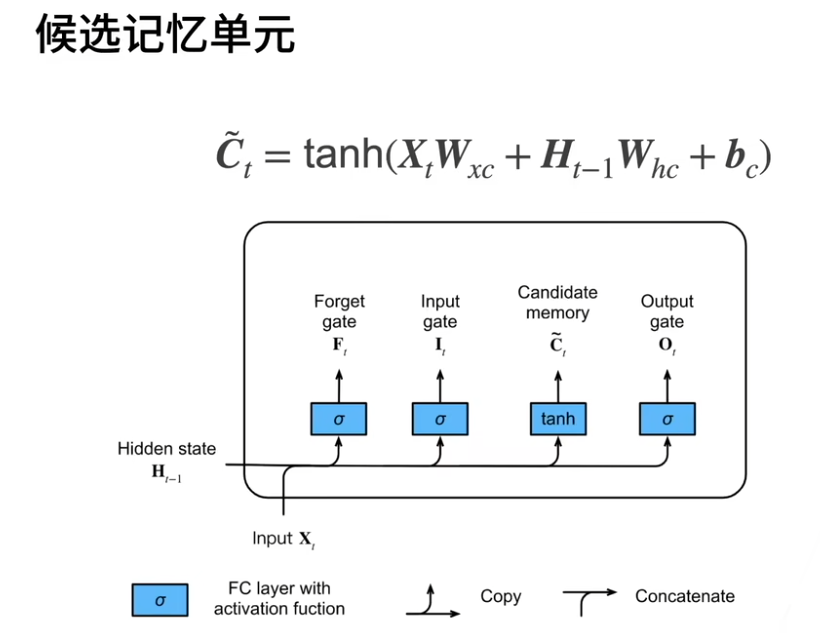
MindSpore中nn.LSTM对应的公式:
h 0 : t , ( h t , c t ) = LSTM ( x 0 : t , ( h 0 , c 0 ) ) h_{0:t}, (h_t, c_t) = \text{LSTM}(x_{0:t}, (h_0, c_0)) h0:t,(ht,ct)=LSTM(x0:t,(h0,c0))
这里nn.LSTM隐藏了整个循环神经网络在序列时间步(Time step)上的循环,送入输入序列、初始状态,即可获得每个时间步的隐状态(hidden state)拼接而成的矩阵,以及最后一个时间步对应的隐状态。我们使用最后的一个时间步的隐状态作为输入句子的编码特征,送入下一层。
Time step:在循环神经网络计算的每一次循环,成为一个Time step。在送入文本序列时,一个Time step对应一个单词。因此在本例中,LSTM的输出 h 0 : t h_{0:t} h0:t对应每个单词的隐状态集合, h t h_t ht和 c t c_t ct对应最后一个单词对应的隐状态。
Dense层
在经过LSTM编码获取句子特征后,将其送入一个全连接层,即nn.Dense,将特征维度变换为二分类所需的维度1,经过Dense层后的输出即为模型预测结果。
2、基于LSTM的文本情感分类
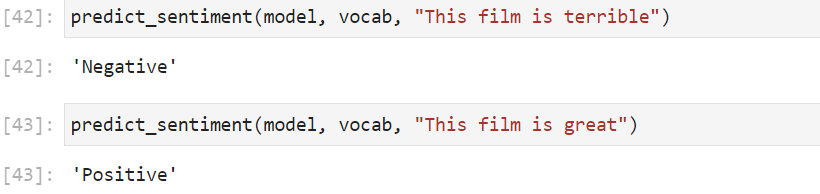
情感分类是自然语言处理中的经典任务,是典型的分类问题。本节使用MindSpore实现一个基于RNN网络的情感分类模型,实现如下的效果:
输入: This film is terrible
正确标签: Negative
预测标签: Negative

输入: This film is great
正确标签: Positive
预测标签: Positive
本节使用情感分类的经典数据集IMDB影评数据集,数据集包含Positive和Negative两类,下面为其样例:
| Review | Label |
|---|---|
| “Quitting” may be as much about exiting a pre-ordained identity as about drug withdrawal. As a rural guy coming to Beijing, class and success must have struck this young artist face on as an appeal to separate from his roots and far surpass his peasant parents’ acting success. Troubles arise, however, when the new man is too new, when it demands too big a departure from family, history, nature, and personal identity. The ensuing splits, and confusion between the imaginary and the real and the dissonance between the ordinary and the heroic are the stuff of a gut check on the one hand or a complete escape from self on the other. | Negative |
| This movie is amazing because the fact that the real people portray themselves and their real life experience and do such a good job it’s like they’re almost living the past over again. Jia Hongsheng plays himself an actor who quit everything except music and drugs struggling with depression and searching for the meaning of life while being angry at everyone especially the people who care for him most. | Positive |
此外,需要使用预训练词向量对自然语言单词进行编码,以获取文本的语义特征,本节选取Glove词向量作为Embedding。
import os
import shutil
import requests
import tempfile
from tqdm import tqdm
from typing import IO
from pathlib import Path

# 指定保存路径为 `home_path/.mindspore_examples`
cache_dir = Path.home() / '.mindspore_examples'

def http_get(url: str, temp_file: IO):
    """使用requests库下载数据,并使用tqdm库进行流程可视化"""
    req = requests.get(url, stream=True)
    content_length = req.headers.get('Content-Length')
    total = int(content_length) if content_length is not None else None
    progress = tqdm(unit='B', total=total)
    for chunk in req.iter_content(chunk_size=1024):
        if chunk:
            progress.update(len(chunk))
            temp_file.write(chunk)
    progress.close()

def download(file_name: str, url: str):
    """下载数据并存为指定名称"""
    if not os.path.exists(cache_dir):
        os.makedirs(cache_dir)
    cache_path = os.path.join(cache_dir, file_name)
    cache_exist = os.path.exists(cache_path)
    if not cache_exist:
        with tempfile.NamedTemporaryFile() as temp_file:
            http_get(url, temp_file)
            temp_file.flush()
            temp_file.seek(0)
            with open(cache_path, 'wb') as cache_file:
                shutil.copyfileobj(temp_file, cache_file)
    return cache_path

imdb_path = download('aclImdb_v1.tar.gz', 'https://mindspore-website.obs.myhuaweicloud.com/notebook/datasets/aclImdb_v1.tar.gz')
加载IMDB数据集
下载好的IMDB数据集为tar.gz文件,我们使用Python的tarfile库对其进行读取,并将所有数据和标签分别进行存放。原始的IMDB数据集解压目录如下:
    ├── aclImdb
    │   ├── imdbEr.txt
    │   ├── imdb.vocab
    │   ├── README
    │   ├── test
    │   └── train
    │         ├── neg
    │         ├── pos
    ...
数据集已分割为train和test两部分,且每部分包含neg和pos两个分类的文件夹,因此需分别train和test进行读取并处理数据和标签。
import re
import six
import string
import tarfile

class IMDBData():
    """IMDB数据集加载器

    加载IMDB数据集并处理为一个Python迭代对象。

    """
    label_map = {
        "pos": 1,
        "neg": 0
    }
    def __init__(self, path, mode="train"):
        self.mode = mode
        self.path = path
        self.docs, self.labels = [], []

        self._load("pos")
        self._load("neg")

    def _load(self, label):
        pattern = re.compile(r"aclImdb/{}/{}/.*\.txt$".format(self.mode, label))
        # 将数据加载至内存
        with tarfile.open(self.path) as tarf:
            tf = tarf.next()
            while tf is not None:
                if bool(pattern.match(tf.name)):
                    # 对文本进行分词、去除标点和特殊字符、小写处理
                    self.docs.append(str(tarf.extractfile(tf).read().rstrip(six.b("\n\r"))
                                         .translate(None, six.b(string.punctuation)).lower()).split())
                    self.labels.append([self.label_map[label]])
                tf = tarf.next()

    def __getitem__(self, idx):
        return self.docs[idx], self.labels[idx]

    def __len__(self):
        return len(self.docs)
imdb_train = IMDBData(imdb_path, 'train')
import mindspore.dataset as ds

# 利用mindspore.dataset读入数据集
def load_imdb(imdb_path):
    imdb_train = ds.GeneratorDataset(IMDBData(imdb_path, "train"), column_names=["text", "label"], shuffle=True, num_samples=10000)
    imdb_test = ds.GeneratorDataset(IMDBData(imdb_path, "test"), column_names=["text", "label"], shuffle=False)
    return imdb_train, imdb_test
imdb_train, imdb_test = load_imdb(imdb_path)
import zipfile
import numpy as np

def load_glove(glove_path):  # 创建GloVe词向量
    glove_100d_path = os.path.join(cache_dir, 'glove.6B.100d.txt')
    if not os.path.exists(glove_100d_path):
        glove_zip = zipfile.ZipFile(glove_path)
        glove_zip.extractall(cache_dir)

    embeddings = []  # 词嵌入向量
    tokens = []
    with open(glove_100d_path, encoding='utf-8') as gf:
        for glove in gf:
            word, embedding = glove.split(maxsplit=1)
            tokens.append(word)
            embeddings.append(np.fromstring(embedding, dtype=np.float32, sep=' '))
    # 添加 <unk>, <pad> 两个特殊占位符对应的embedding
    embeddings.append(np.random.rand(100))
    embeddings.append(np.zeros((100,), np.float32))

    vocab = ds.text.Vocab.from_list(tokens, special_tokens=["<unk>", "<pad>"], special_first=False)
    embeddings = np.array(embeddings).astype(np.float32)
    return vocab, embeddings

glove_path = download('glove.6B.zip', 'https://mindspore-website.obs.myhuaweicloud.com/notebook/datasets/glove.6B.zip')
vocab, embeddings = load_glove(glove_path)
len(vocab.vocab())
idx = vocab.tokens_to_ids('the')
embedding = embeddings[idx]
idx, embedding
(0,
array([-0.038194, -0.24487 , 0.72812 , -0.39961 , 0.083172, 0.043953,
-0.39141 , 0.3344 , -0.57545 , 0.087459, 0.28787 , -0.06731 ,
0.30906 , -0.26384 , -0.13231 , -0.20757 , 0.33395 , -0.33848 ,
-0.31743 , -0.48336 , 0.1464 , -0.37304 , 0.34577 , 0.052041,
0.44946 , -0.46971 , 0.02628 , -0.54155 , -0.15518 , -0.14107 ,
-0.039722, 0.28277 , 0.14393 , 0.23464 , -0.31021 , 0.086173,
0.20397 , 0.52624 , 0.17164 , -0.082378, -0.71787 , -0.41531 ,
0.20335 , -0.12763 , 0.41367 , 0.55187 , 0.57908 , -0.33477 ,
-0.36559 , -0.54857 , -0.062892, 0.26584 , 0.30205 , 0.99775 ,
-0.80481 , -3.0243 , 0.01254 , -0.36942 , 2.2167 , 0.72201 ,
-0.24978 , 0.92136 , 0.034514, 0.46745 , 1.1079 , -0.19358 ,
-0.074575, 0.23353 , -0.052062, -0.22044 , 0.057162, -0.15806 ,
-0.30798 , -0.41625 , 0.37972 , 0.15006 , -0.53212 , -0.2055 ,
-1.2526 , 0.071624, 0.70565 , 0.49744 , -0.42063 , 0.26148 ,
-1.538 , -0.30223 , -0.073438, -0.28312 , 0.37104 , -0.25217 ,
0.016215, -0.017099, -0.38984 , 0.87424 , -0.72569 , -0.51058 ,
-0.52028 , -0.1459 , 0.8278 , 0.27062 ], dtype=float32))
数据集预处理
通过加载器加载的IMDB数据集进行了分词处理,但不满足构造训练数据的需要,因此要对其进行额外的预处理。其中包含的预处理如下:
- 通过Vocab将所有的Token处理为index id。
- 将文本序列统一长度,不足的使用
<pad>补齐,超出的进行截断。
这里我们使用mindspore.dataset中提供的接口进行预处理操作。这里使用到的接口均为MindSpore的高性能数据引擎设计,每个接口对应操作视作数据流水线的一部分,详情请参考MindSpore数据引擎。
首先针对token到index id的查表操作,使用text.Lookup接口,将前文构造的词表加载,并指定unknown_token。其次为文本序列统一长度操作,使用PadEnd接口,此接口定义最大长度和补齐值(pad_value),这里我们取最大长度为500,填充值对应词表中<pad>的index id。
除了对数据集中
text进行预处理外,由于后续模型训练的需要,要将label数据转为float32格式。
import mindspore as ms

lookup_op = ds.text.Lookup(vocab, unknown_token='<unk>')
pad_op = ds.transforms.PadEnd([500], pad_value=vocab.tokens_to_ids('<pad>'))
type_cast_op = ds.transforms.TypeCast(ms.float32)

imdb_train = imdb_train.map(operations=[lookup_op, pad_op], input_columns=['text'])
imdb_train = imdb_train.map(operations=[type_cast_op], input_columns=['label'])

imdb_test = imdb_test.map(operations=[lookup_op, pad_op], input_columns=['text'])
imdb_test = imdb_test.map(operations=[type_cast_op], input_columns=['label'])

imdb_train, imdb_valid = imdb_train.split([0.7, 0.3])
imdb_train = imdb_train.batch(64, drop_remainder=True)
imdb_valid = imdb_valid.batch(64, drop_remainder=True)
3、模型构建
import math
import mindspore as ms
import mindspore.nn as nn
import mindspore.ops as ops
from mindspore.common.initializer import Uniform, HeUniform

class RNN(nn.Cell):
    def __init__(self, embeddings, hidden_dim, output_dim, n_layers,
                 bidirectional, pad_idx):
        super().__init__()
        vocab_size, embedding_dim = embeddings.shape
        self.embedding = nn.Embedding(vocab_size, embedding_dim, embedding_table=ms.Tensor(embeddings), padding_idx=pad_idx)
        self.rnn = nn.LSTM(embedding_dim,
                           hidden_dim,
                           num_layers=n_layers,
                           bidirectional=bidirectional,
                           batch_first=True)
        weight_init = HeUniform(math.sqrt(5))
        bias_init = Uniform(1 / math.sqrt(hidden_dim * 2))
        self.fc = nn.Dense(hidden_dim * 2, output_dim, weight_init=weight_init, bias_init=bias_init)

    def construct(self, inputs):
        embedded = self.embedding(inputs)
        _, (hidden, _) = self.rnn(embedded)
        hidden = ops.concat((hidden[-2, :, :], hidden[-1, :, :]), axis=1)
        output = self.fc(hidden)
        return output

hidden_size = 256
output_size = 1
num_layers = 2
bidirectional = True
lr = 0.001
pad_idx = vocab.tokens_to_ids('<pad>')

model = RNN(embeddings, hidden_size, output_size, num_layers, bidirectional, pad_idx)
loss_fn = nn.BCEWithLogitsLoss(reduction='mean')
optimizer = nn.Adam(model.trainable_params(), learning_rate=lr)
4、模型训练
在完成模型构建,进行训练逻辑的设计。一般训练逻辑分为一下步骤:
- 读取一个Batch的数据;
- 送入网络,进行正向计算和反向传播,更新权重;
- 返回loss。
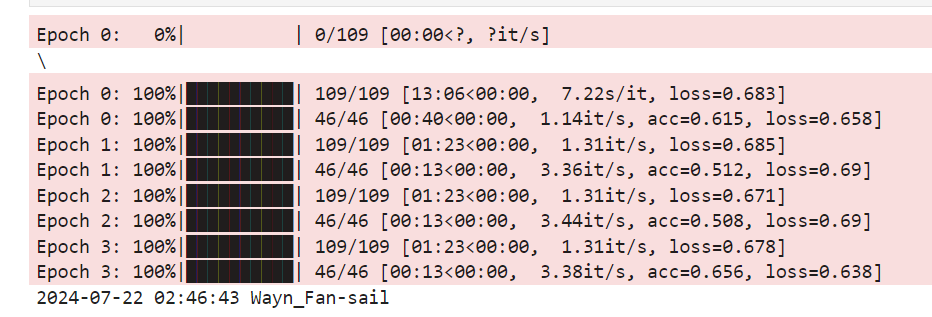
下面按照此逻辑,使用tqdm库,设计训练一个epoch的函数,用于训练过程和loss的可视化。
def forward_fn(data, label):
    logits = model(data)
    loss = loss_fn(logits, label)
    return loss

grad_fn = ms.value_and_grad(forward_fn, None, optimizer.parameters)

def train_step(data, label):
    loss, grads = grad_fn(data, label)
    optimizer(grads)
    return loss

def train_one_epoch(model, train_dataset, epoch=0):
    model.set_train()
    total = train_dataset.get_dataset_size()
    loss_total = 0
    step_total = 0
    with tqdm(total=total) as t:
        t.set_description('Epoch %i' % epoch)
        for i in train_dataset.create_tuple_iterator():
            loss = train_step(*i)
            loss_total += loss.asnumpy()
            step_total += 1
            t.set_postfix(loss=loss_total/step_total)
            t.update(1)

num_epochs = 4
best_valid_loss = float('inf')
ckpt_file_name = os.path.join(cache_dir, 'sentiment-analysis.ckpt')

for epoch in range(num_epochs):
    train_one_epoch(model, imdb_train, epoch)
    valid_loss = evaluate(model, imdb_valid, loss_fn, epoch)

    if valid_loss < best_valid_loss:
        best_valid_loss = valid_loss
        ms.save_checkpoint(model, ckpt_file_name)
5、模型评估与推理
训练逻辑完成后,需要对模型进行评估。即使用模型的预测结果和测试集的正确标签进行对比,求出预测的准确率。由于IMDB的情感分类为二分类问题,对预测值直接进行四舍五入即可获得分类标签(0或1),然后判断是否与正确标签相等即可。下面为二分类准确率计算函数实现:
def binary_accuracy(preds, y):
    """
    计算每个batch的准确率
    """

    # 对预测值进行四舍五入
    rounded_preds = np.around(ops.sigmoid(preds).asnumpy())
    correct = (rounded_preds == y).astype(np.float32)
    acc = correct.sum() / len(correct)
    return acc
有了准确率计算函数后,类似于训练逻辑,对评估逻辑进行设计, 分别为以下步骤:
- 读取一个Batch的数据;
- 送入网络,进行正向计算,获得预测结果;
- 计算准确率。
同训练逻辑一样,使用tqdm进行loss和过程的可视化。此外返回评估loss至供保存模型时作为模型优劣的判断依据。
在进行evaluate时,使用的模型是不包含损失函数和优化器的网络主体;
在进行evaluate前,需要通过model.set_train(False)将模型置为评估状态,此时Dropout不生效。
def evaluate(model, test_dataset, criterion, epoch=0):
    total = test_dataset.get_dataset_size()
    epoch_loss = 0
    epoch_acc = 0
    step_total = 0
    model.set_train(False)

    with tqdm(total=total) as t:
        t.set_description('Epoch %i' % epoch)
        for i in test_dataset.create_tuple_iterator():
            predictions = model(i[0])
            loss = criterion(predictions, i[1])
            epoch_loss += loss.asnumpy()

            acc = binary_accuracy(predictions, i[1])
            epoch_acc += acc

            step_total += 1
            t.set_postfix(loss=epoch_loss/step_total, acc=epoch_acc/step_total)
            t.update(1)

    return epoch_loss / total
param_dict = ms.load_checkpoint(ckpt_file_name)
ms.load_param_into_net(model, param_dict)
imdb_test = imdb_test.batch(64)
evaluate(model, imdb_test, loss_fn)

score_map = {
    1: "Positive",
    0: "Negative"
}

def predict_sentiment(model, vocab, sentence):
    model.set_train(False)
    tokenized = sentence.lower().split()
    indexed = vocab.tokens_to_ids(tokenized)
    tensor = ms.Tensor(indexed, ms.int32)
    tensor = tensor.expand_dims(0)
    prediction = model(tensor)
    return score_map[int(np.round(ops.sigmoid(prediction).asnumpy()))]
利用RNN实现情感分类还是要比直接调用预训练的LLM大模型复杂一些,主要是本节多了很多数据预处理和glove词向量这种工程的东西,没有NLP的基础啃起来比较吃力,没有Glove词向量作为Embedding,RNN模型再强大,也很难高效训练,LLM也是如此,glove词向量结合了其他两种词向量技术的优势,对NLP感兴趣的同学可以多了解一下。
Reference
[1] 昇思官方文档-RNN实现情感分类
[2] 昇思大模型平台

昇腾计算产业是基于昇腾系列(HUAWEI Ascend)处理器和基础软件构建的全栈 AI计算基础设施、行业应用及服务,https://devpress.csdn.net/organization/setting/general/146749包括昇腾系列处理器、系列硬件、CANN、AI计算框架、应用使能、开发工具链、管理运维工具、行业应用及服务等全产业链
更多推荐

 21
21 0
0- 0


 已为社区贡献20条内容

所有评论(0)